
Why Short Trips Kill Your DPF: Regen Problems in Delivery and Box Trucks

Short trips kill your DPF because diesel particulate filters clean themselves with heat, and local delivery routes almost never generate enough of it. Passive regeneration needs sustained highway-speed driving to raise exhaust temperatures high enough to burn off soot, while stop-and-go duty cycles keep cutting off the active regens your truck’s computer tries to run instead. The result is a filter that loads up faster than it can clean itself, which is why local delivery vans and box trucks show up in shops with DPF warnings and derate problems so often.

Why City Duty Cycles Starve the DPF of Heat

A diesel particulate filter traps soot from the exhaust, and the engine is designed to burn that soot off in a process called regeneration. Passive regen happens on its own when the exhaust gets hot enough, which generally requires steady highway-speed driving under load. We cover the full process in our companion explainer on how DPF regeneration works.

Now picture a typical delivery day: cold start, two miles to the first stop, ten minutes idling at a dock, then another short hop. The exhaust barely warms up before the engine shuts down again. On that duty cycle the filter almost never sees passive regen conditions, so soot keeps stacking up.

Interrupted Active Regens Make Things Worse

When soot passes a set threshold, the computer starts an active regen, typically injecting extra fuel to push exhaust temperatures up and cook the filter clean. The catch is that an active regen needs uninterrupted driving time to finish. A driver who reaches the next stop and shuts the truck down cancels the cycle partway through.

Do that several times a day and the math turns against you: soot accumulates faster than the interrupted regens can burn it off, the computer calls for regens more and more often, and the filter loads toward its limit.

From Warning Light to Limp Mode: Why Waiting Gets Expensive

The pattern is predictable. Occasional DPF warnings become frequent ones, fuel economy often slips, and eventually the engine derates or drops into limp mode to protect itself. At that point the filter may be too loaded to regenerate on the road at all.

The cost gap is what makes early attention pay. A forced regen at the shop, a controlled stationary cleaning cycle, typically costs a few hundred dollars. A filter driven to full clog commonly costs several thousand dollars to replace. Our diesel truck repair team diagnoses DPF problems and performs forced regens as part of regular diesel service.

How to Keep a Delivery or Box Truck Regenerating

You cannot change your routes, but you can change how the truck is managed around them:

  • Schedule a sustained highway run. Build a regular highway-speed drive into the rotation so the filter gets real regen conditions instead of waiting for a crisis.
  • Never ignore the DPF light. It is the cheapest warning you will ever get. Acting on it early usually means a simple regen instead of a replacement.
  • Let regens finish. If the truck signals a regen in progress and it is safe to keep driving or idle through the cycle, let it complete. Shutting down mid-regen is how soot wins.
  • Use the correct low-ash diesel oil. Ash from the wrong oil does not burn off during regeneration, so it slowly packs the filter.
  • Check soot levels at service time. Soot readings during routine maintenance show whether your duty cycle is keeping up, before the dashboard complains.

For companies running multiple trucks, folding these checks into a fleet maintenance program keeps DPF surprises from sidelining vehicles during your busiest weeks. And if one of your trucks is already throwing warnings or has derated, our box truck repair team can diagnose the problem and perform a forced regen before a loaded filter turns into a replacement.

Frequently Asked Questions

Can I keep driving with the DPF warning light on?

Generally you can drive for a short while after the first DPF light, but the filter is already loaded and asking for a regen. If your routes stay short and stop-and-go, soot keeps climbing until the engine derates. Get the truck up to sustained highway speed soon, or have a shop perform a forced regen.

How much does a forced DPF regen cost compared to replacement?

A forced regen performed at a shop typically costs a few hundred dollars, depending on the truck and how long the procedure takes. Replacing a fully clogged DPF commonly runs several thousand dollars. That gap is why acting on early DPF warnings almost always saves delivery and box truck operators money.

How often should a delivery truck get a highway run for regeneration?

There is no single interval that fits every truck. It depends on route length, idle time, and load. Many local delivery trucks benefit from a regular sustained highway drive at operating temperature, and soot-level readings taken during routine service are the most reliable way to see how often yours actually needs one.

Does the engine oil I use affect DPF life?

Yes. Diesel engines that have a DPF generally need low-ash oil that meets the manufacturer’s specification. Soot burns off during regeneration, but ash from the wrong oil does not, so it slowly packs the filter until cleaning or replacement is the only fix. Using the correct oil is cheap DPF insurance.

Truck, RV & Diesel Service in King of Prussia

Express Truck & Auto Services is a certified PA state and D.O.T. inspection agency at 331 Crooked Lane, King of Prussia, PA 19406. Call (484) 370-2835 or schedule online. Open Monday to Friday 9:00am to 6:00pm and Saturday 9:00am to 2:00pm.
DPF Regen Explained: How Long It Takes, How Often, and When You Need a Forced Regen

A DPF regen typically takes 20 to 45 minutes for an active regen done while you drive, and around 45 minutes for a forced regen performed at a shop with a scan tool. How often it happens depends almost entirely on how the truck is driven, and you generally need a forced regen when the soot load climbs too high for the truck to clean the filter on its own.

Here is what is actually happening inside that filter, how long each type of regen takes, and the warning signs that mean it is time to put a technician on it.

The Three Types of DPF Regen

Your diesel particulate filter, or DPF, sits in the exhaust system and traps soot before it leaves the tailpipe. Regeneration burns that soot off so the filter does not clog. It happens three ways:

  • Passive regen happens automatically during sustained highway driving, when exhaust temperatures get hot enough on their own. You will never notice it.
  • Active regen kicks in when the engine computer decides the filter needs help. It adds extra fuel to raise exhaust temperatures, and it typically takes roughly 20 to 45 minutes of continued driving. That word continued matters: shut the truck down partway through often enough and soot builds up faster than the truck can burn it off.
  • Forced regen, also called a parked regen, is performed at a shop with a scan tool once the soot load is too high for the truck to handle itself. It commonly takes around 45 minutes.

How Often Should Your Truck Regen?

There is no single right number, because regen frequency follows duty cycle. A truck that lives at highway speed generally regens the least, since passive regeneration does constant background cleanup. A delivery truck working stop-and-go routes will regen far more often, because the exhaust rarely stays hot long enough to clean the filter passively.

What matters most is the trend. If your truck used to regen once a week and now asks every other day, something changed: the routes, a sensor, or a filter that is slowly loading up. Short urban trips are one of the most common causes, and we cover that in our companion post on short trips and DPF problems. For fleets, tracking regen frequency truck by truck is one of the cheapest early warnings you can build into a fleet maintenance program.

Warning Signs a Forced Regen Is Coming

A truck generally gives plenty of notice before a DPF problem becomes a breakdown. Watch for:

  • The DPF or regen light coming on, or staying on
  • Regens happening noticeably more often than they used to
  • Loss of power, especially under load
  • Worse fuel economy, since active regens burn extra fuel and a loaded filter can make the engine work harder

One of these alone might be nothing. Two or more together usually mean the filter is loading faster than the truck can clean it, and a forced regen is probably in your near future.

When You Need a Forced Regen, and What It Costs

You need a forced regen when the soot load is high enough that the truck can no longer start or finish an active regen on its own. Keep driving past that point and the computer typically cuts power to protect the engine, then drops the truck into limp mode.

A forced regen commonly runs a few hundred dollars at a shop and takes around 45 minutes with a scan tool. Compare that to the alternative: a DPF that gets overloaded or damaged commonly costs several thousand dollars to replace, which makes the forced regen cheap insurance. It also gives a technician the chance to find out why the soot piled up in the first place, whether that is duty cycle, a sensor, or an upstream engine issue. That diagnosis is the real value of taking it to a diesel truck repair shop instead of clearing the code and hoping.

One last thing: never delete the DPF. Deletes are illegal for road use, and the short-term convenience is not worth the exposure. Fix the cause instead.

Frequently Asked Questions

How long does a DPF regen take?

An active regen typically takes roughly 20 to 45 minutes of continued driving while the engine computer raises exhaust temperatures to burn off soot. A forced or parked regen, performed at a shop with a scan tool, commonly takes around 45 minutes. Interrupting an active regen repeatedly lets soot build up in the filter.

How often should a diesel truck regen?

It depends on duty cycle. Trucks that run sustained highway miles generally regen less often because passive regeneration happens naturally when the exhaust stays hot. Trucks in stop-and-go work or on short routes generally regen far more often because the exhaust rarely gets hot enough to clean the filter on its own.

How much does a forced regen cost?

A forced regen at a shop commonly runs a few hundred dollars and typically takes around 45 minutes with a scan tool. That is cheap compared to ignoring the problem: a clogged filter can push the truck into limp mode, and DPF replacement commonly costs several thousand dollars.

Can I just delete the DPF instead of dealing with regens?

No. Deleting the DPF is illegal for road use, and it can create problems with emissions inspections and resale. Regen trouble usually traces back to duty cycle, a sensor, or an upstream engine issue, and fixing the actual cause costs far less than the risk a delete carries.

Truck, RV & Diesel Service in King of Prussia

Express Truck & Auto Services is a certified PA state and D.O.T. inspection agency at 331 Crooked Lane, King of Prussia, PA 19406. Call (484) 370-2835 or schedule online. Open Monday to Friday 9:00am to 6:00pm and Saturday 9:00am to 2:00pm.
Does My RV or Camper Need a State Inspection in Pennsylvania?

Yes: if your RV is a motorhome, it needs Pennsylvania’s annual state safety inspection just like any car or truck, and a towed camper generally needs one too when its gross vehicle weight rating is over 3,000 pounds. Lighter trailers are generally exempt under current rules.

The details trip up a lot of owners, especially the difference between what a camper actually weighs and what it is rated to carry. Here is how the rules typically break down before you hitch up this season.

Motorhomes Are Inspected Like Any Other Vehicle

A Class A, B, or C motorhome is a registered motor vehicle in Pennsylvania, so it gets the same annual safety inspection as any car or pickup. An inspector typically checks brakes, tires, lights, steering, suspension, glass, wipers, horn, and the rest of the standard checklist. The items that commonly trip up motorhomes are the same ones that trip up trucks: worn brakes, aged tires, and lighting problems. A motorhome that sits all winter is especially prone to tire dry rot, so give the sidewalls a close look before inspection time.

Towed Campers and Travel Trailers: The 3,000 Pound Rule

For campers you tow, Pennsylvania generally draws the line at a gross vehicle weight rating of 3,000 pounds. Trailers rated above that figure typically need an annual safety inspection, while trailers rated at or below it are generally exempt. In practice, that means most full-size travel trailers and fifth wheels need a sticker, while many small pop-ups and lightweight teardrop campers do not.

A trailer inspection typically focuses on:

  • Brakes and breakaway equipment, if the trailer has them
  • Lights, reflectors, and wiring connections
  • Tires and wheels
  • Hitch, coupler, and safety chains
  • Frame and body condition

The Rating Counts, Not the Weight

Here is the part that catches people. The 3,000 pound threshold is based on the gross vehicle weight rating stamped on the camper’s VIN plate, not on what the camper actually weighs. A lightweight camper that weighs 2,400 pounds empty but carries a 3,500 pound rating still needs an annual inspection. Before you assume you are exempt, find the manufacturer’s certification label, usually riveted to the trailer tongue or the front left side of the frame, and read the GVWR line. That number is what an inspector goes by.

What About Emissions Testing?

Most RV owners can skip emissions entirely. Diesel-powered vehicles are exempt from Pennsylvania emissions testing under current rules, and gasoline vehicles rated over 9,000 pounds GVWR are generally exempt as well, which covers the vast majority of motorhomes. Towed campers have no engine, so emissions never applies to them. Keep in mind that the emissions exemption does not touch the safety inspection requirement: a diesel pusher still needs its annual safety sticker. We cover the diesel side in more detail in our post on diesel emissions testing in Pennsylvania.

Getting Your RV Ready for the Season

The Valley Forge area sees heavy RV traffic once the weather warms up, and an expired inspection sticker is an easy way to spoil the first trip of the year. A pre-season inspection also doubles as a health check, since brakes, tires, lights, and wipers all get a trained set of eyes on them before you load up the family. Express Truck & Auto Services is a certified PA state and DOT inspection agency in the Valley Forge area, and we inspect motorhomes and RVs alongside the trucks and cars that come through the shop every day. If you are planning an early trip, it is worth scheduling an appointment ahead of the spring rush, and mentioning the size of your rig helps us plan bay space for it.

Frequently Asked Questions

Does a pop-up camper need a Pennsylvania state inspection?

Generally no, as long as its gross vehicle weight rating is 3,000 pounds or less, which covers most pop-up campers. Check the VIN plate on the trailer frame to confirm the rating. If it is over 3,000 pounds, Pennsylvania generally requires an annual safety inspection.

Do motorhomes need emissions testing in Pennsylvania?

Usually not. Diesel vehicles are exempt from Pennsylvania emissions testing under current rules, and gasoline vehicles rated over 9,000 pounds GVWR are generally exempt too, which covers most motorhomes. They still need the annual state safety inspection, which is a separate requirement from emissions.

Where do I find my camper’s GVWR?

Look for the manufacturer’s VIN plate or federal certification label, typically riveted to the trailer tongue or the front left side of the frame. It lists the gross vehicle weight rating. That rating, not what the camper actually weighs, determines whether Pennsylvania generally requires an annual inspection.

Can I get my RV or motorhome inspected near Valley Forge?

Yes. Express Truck & Auto Services is a certified PA state and DOT inspection agency and inspects motorhomes, RVs, trucks, and cars. Scheduling an appointment ahead of the spring rush is a good idea, and mentioning the size of your rig helps the shop plan bay space.

Truck, RV & Diesel Service in King of Prussia

Express Truck & Auto Services is a certified PA state and D.O.T. inspection agency at 331 Crooked Lane, King of Prussia, PA 19406. Call (484) 370-2835 or schedule online. Open Monday to Friday 9:00am to 6:00pm and Saturday 9:00am to 2:00pm.
Does My Box Truck Need a PA Inspection, a DOT Inspection, or Both?

If your box truck is registered in Pennsylvania and used for business, it typically needs both inspections: the annual PA state safety inspection and the annual federal DOT inspection. The state inspection comes with your PA registration, and the federal DOT inspection generally applies once a commercial vehicle’s weight rating reaches 10,001 pounds, which covers most box trucks working today.

The good news: a shop certified for both can knock out the two inspections in one visit. Here is how each requirement works and how to tell which ones apply to your truck.

The PA State Safety Inspection: Required for Every Registered Truck

Pennsylvania requires an annual safety inspection for every vehicle registered in the state, and box trucks are no exception. There is no weight cutoff and no business-use test: if it carries PA plates, it needs a current inspection sticker.

The inspection covers the systems that keep a heavy truck safe: brakes, tires, steering, suspension, lights, mirrors, glass, and exhaust. Box trucks carry weight all day, so worn brakes and tires tend to be the most common trouble spots worth checking before the appointment.

Emissions Testing: Most Box Trucks Are Exempt

Emissions testing is where owners tend to overthink it. Under current rules, PA emissions testing applies only to gasoline vehicles with a GVWR of 9,000 pounds or less, and only in participating counties. Montgomery County is one of the counties that participates.

Most box trucks miss that window twice: they are typically diesel, and even the gas models usually rate well above 9,000 pounds. So the average box truck is exempt from emissions testing, but that changes nothing about the safety inspection. You still need the sticker every year.

The Federal DOT Inspection and the 10,001-Pound Rule

The federal annual DOT inspection is a separate requirement. It generally applies to vehicles used in commerce with a gross vehicle weight rating, or a combined rating with a trailer, of 10,001 pounds or more. “Used in commerce” is broad: hauling goods, tools, or equipment for a business usually counts.

Most 12 to 26 foot box trucks rate comfortably above that line, so a truck that works for a living typically needs the annual DOT inspection on top of the state one. We explain the details, including how trailers change the math, in our post on the DOT 10,001-pound rule.

The CDL Question Is a Different Question

Owners often mix up the DOT inspection threshold with the CDL threshold, and they are different questions. The CDL conversation generally starts at 26,001 pounds, and it is about who may drive the truck, not whether the truck gets inspected. A 16 foot box truck rated at 12,500 pounds usually needs no CDL, yet it still needs both inspections if it works commercially.

Knock Out Both Inspections in One Visit

Both inspections look at overlapping systems such as brakes, tires, lights, and steering, so there is no reason to schedule them separately. A shop certified as both a state inspection station and a DOT inspection agency can complete PA state and DOT inspections in one appointment, which keeps your truck earning instead of waiting.

One practical tip: walk the truck before you bring it in. Check tread depth, test every light, and listen for brake noise. If something needs attention, pairing the box truck repair with the inspections saves a second trip and another day of downtime.

Frequently Asked Questions

Does a box truck need a PA state inspection every year?

Yes. Pennsylvania requires an annual safety inspection for every vehicle registered in the state, and box trucks are included regardless of weight or how they are used. The inspection covers brakes, tires, lights, steering, suspension, and other safety systems, and the truck must display a current inspection sticker.

Does my box truck need emissions testing in Pennsylvania?

Generally no. Under current rules, Pennsylvania emissions testing applies only to gasoline vehicles rated 9,000 pounds GVWR or less in participating counties. Most box trucks are diesel or exceed that weight, so they are typically exempt from emissions testing, but they still need the annual state safety inspection.

When does a box truck need an annual DOT inspection?

Generally, a truck needs a federal annual DOT inspection when it is used in commerce and has a gross vehicle weight rating, or a combined rating with a trailer, of 10,001 pounds or more. Most 12 to 26 foot box trucks exceed that threshold, so business box trucks typically need one every year.

Can I get the PA state inspection and the DOT inspection done in one visit?

Yes. A shop certified as both a Pennsylvania state inspection station and a DOT inspection agency can perform both inspections in the same appointment. The two inspections check many of the same systems, so combining them saves time and limits how long a working truck sits out of service.

Truck, RV & Diesel Service in King of Prussia

Express Truck & Auto Services is a certified PA state and D.O.T. inspection agency at 331 Crooked Lane, King of Prussia, PA 19406. Call (484) 370-2835 or schedule online. Open Monday to Friday 9:00am to 6:00pm and Saturday 9:00am to 2:00pm.
The 10,001-Pound Rule: Which Trucks Need an Annual DOT Inspection

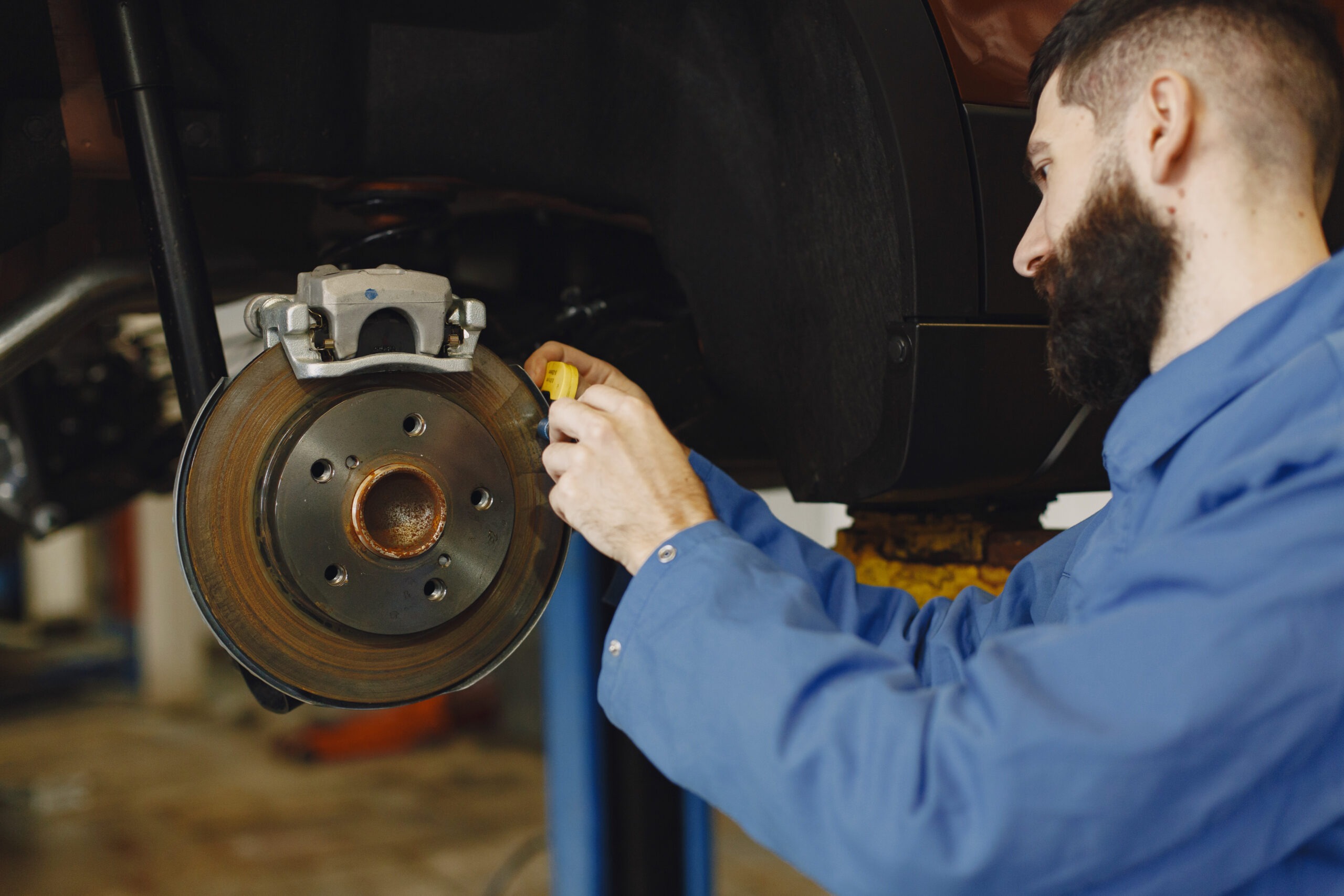
Many truck owners believe DOT inspections only apply to big rigs and CDL drivers. The real line is much lower. Under the federal safety regulations, a commercial vehicle generally needs a periodic annual inspection once its weight rating reaches 10,001 pounds, and no CDL is required to cross that line. A CDL does not become an issue until 26,001 pounds, and confusing those two numbers is how a lot of small businesses end up out of compliance without knowing it.

The Two Numbers People Confuse

  • 10,001 pounds: the point where a vehicle used for business generally becomes a commercial motor vehicle under the federal safety rules, which brings the annual inspection requirement with it.
  • 26,001 pounds: the point where the driver needs a commercial driver’s license.
  • Between those two numbers sits a huge fleet of box trucks, stake bodies, work vans, and pickup-and-trailer combinations that need an annual DOT inspection even though the driver needs no CDL.

Does Your Truck Cross the 10,001-Pound Line?

The rule looks at the manufacturer’s weight ratings, not what the truck actually weighs on a given day. Check the GVWR sticker on the driver door jamb. And remember that combinations count: a pickup rated at 7,500 pounds towing a trailer rated at 3,000 pounds has a combined rating over 10,001 pounds, which can bring the whole combination under the rules when it is used for business.

  • Most 12 to 26 foot box trucks and delivery trucks qualify.
  • Many dually pickups and service-body trucks qualify on their own.
  • Landscaping and contractor rigs often qualify as pickup-plus-trailer combinations.
  • The trailer itself needs inspection too when the combination is covered.

Interstate operators fall squarely under the federal rules. If you operate only inside Pennsylvania, similar state requirements apply to many operations, and your annual PA safety inspection is required either way. Not sure which bucket your truck is in? Bring it by and we will look at the ratings with you.

What the Annual DOT Inspection Covers

A qualified inspector works through the federal inspection criteria: brake systems, coupling devices, exhaust, fuel system, lighting, steering, suspension, frame, tires, wheels, windshield, and wipers. Vehicles that pass carry documentation and a decal, and the inspection report stays with your records. Drivers are also expected to do their own daily walk-around checks, but those do not replace the annual inspection by a qualified inspector.

DOT Inspections in King of Prussia

Express Truck & Auto Services is a certified PA state and D.O.T. inspection agency. We inspect box trucks, work trucks, and business fleets, and because we also handle diesel repair under the same roof, anything the inspection turns up can be quoted and fixed without a second trip. See our PA state and DOT inspection page for details.

DOT Inspection FAQs

Do I need a CDL for my truck to need a DOT inspection?

No. The annual inspection requirement generally starts at 10,001 pounds GVWR for vehicles used in commerce. The CDL requirement starts at 26,001 pounds. Plenty of trucks need the inspection while the driver needs no CDL.

Does my pickup and trailer combination need a DOT inspection?

It can. The rules look at combined weight ratings, so a business pickup towing a trailer can cross 10,001 pounds combined even when neither unit does alone. Check both ratings, and remember covered trailers need inspection too.

How often is a DOT inspection required?

Annually. Every covered commercial vehicle must pass a periodic inspection at least once every 12 months, and the documentation must be retained.

Where can I get a DOT inspection near King of Prussia?

Express Truck & Auto Services at 331 Crooked Lane, King of Prussia is a certified D.O.T. inspection agency. Call (484) 370-2835 or schedule online, and combine the DOT inspection with your PA state inspection in one visit.

Get Inspected the Same Day in King of Prussia

Express Truck & Auto Services is a certified PA state and D.O.T. inspection agency at 331 Crooked Lane, King of Prussia, PA 19406. Drop off before 10:00am and your inspection is done the same day, pass or fail. Call (484) 370-2835 or schedule online.

What Fails a PA State Inspection? The 10 Most Common Reasons

Most vehicles that fail a Pennsylvania state inspection fail for a handful of predictable, fixable reasons. Worn tires top the list, followed by brakes, lights, and windshield problems. Here is what inspectors actually check, the ten most common reasons vehicles fail, and roughly what each fix involves, so you are not surprised at the shop.

The 10 Most Common PA Inspection Failures

  1. Worn tires. Tread depth below 2/32 of an inch anywhere on the tire is an automatic failure, and uneven wear from alignment problems gets flagged too. Fix: replace the worn tires; prices vary by size and brand.
  2. Brakes. Pads or linings worn below spec, scored rotors, or a weak parking brake. Fix: pads and rotors typically run a few hundred dollars per axle.
  3. Lights. A single burned-out headlight, brake light, or turn signal fails the vehicle. Fix: often just a bulb, the cheapest failure to prevent by checking before your appointment.
  4. Windshield damage. Cracks or chips in the area swept by the wipers, especially in the driver’s line of sight. Fix: chip repair is inexpensive; full replacement is often covered by comprehensive insurance.
  5. Wipers and washers. Torn blades or a washer system that does not spray. Fix: usually under $30.
  6. Steering and suspension. Worn ball joints, tie rod ends, or shocks that no longer control the vehicle. Fix: varies by component; we quote before any work.
  7. Exhaust leaks. Holes or leaks in the exhaust system, or missing components. Fix: depends on which section is leaking.
  8. Check engine light. In emissions counties like Montgomery County, an illuminated check engine light fails the OBD emissions test that runs alongside the safety inspection. Fix: diagnose the code first; never just clear it, because the emissions monitors must reset before a retest.
  9. Horn and mirrors. A horn that does not sound, or a cracked, missing, or loose required mirror. Fix: quick and inexpensive.
  10. Leaks and structural rust. Significant fluid leaks or rust-through in structural areas of the body or frame. Fix: evaluated case by case.

What Inspectors Check in Pennsylvania

The annual PA safety inspection covers the systems that keep a vehicle safe on the road: tires and wheels, brakes, steering and suspension, lights and electrical, glazing, mirrors, horn, wipers, exhaust, fuel system, and the body and chassis. In participating counties, including Montgomery County, gasoline vehicles 9,000 pounds and under also get the OBD emissions check at the same visit. If your sticker has already lapsed, see our guide to the PA inspection grace period.

How to Pass the First Time

  • Check your lights, horn, and wipers the week before. These are the cheapest failures to prevent.
  • Look at your tires: if any tread groove looks shallow, have it measured.
  • If the check engine light is on, get it diagnosed before the inspection, not after. Clearing codes right before the test does not work because the monitors need drive time to reset.
  • Bring your current registration and proof of insurance.

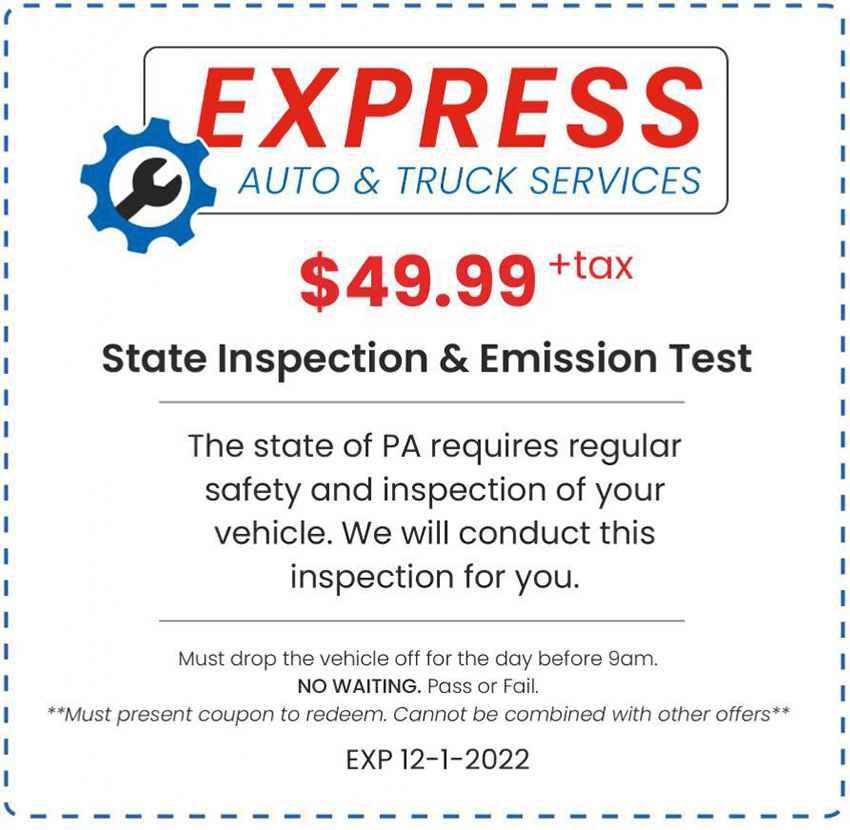
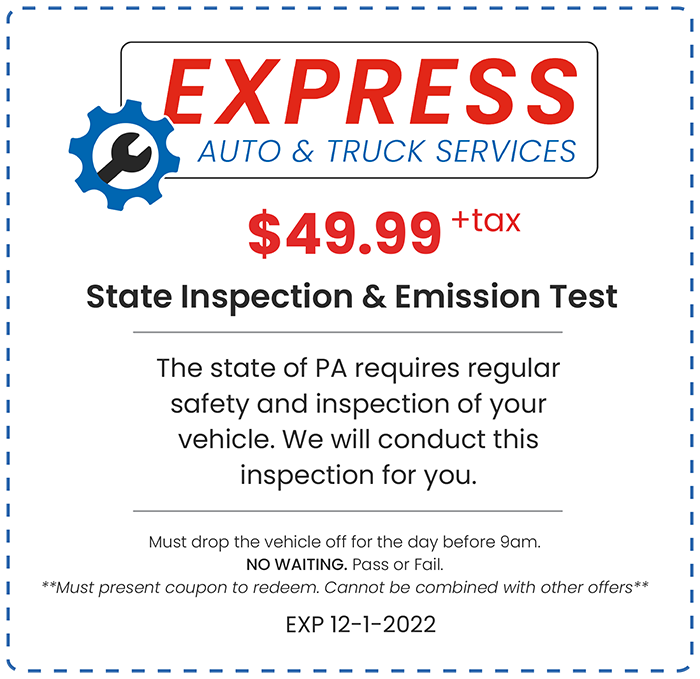
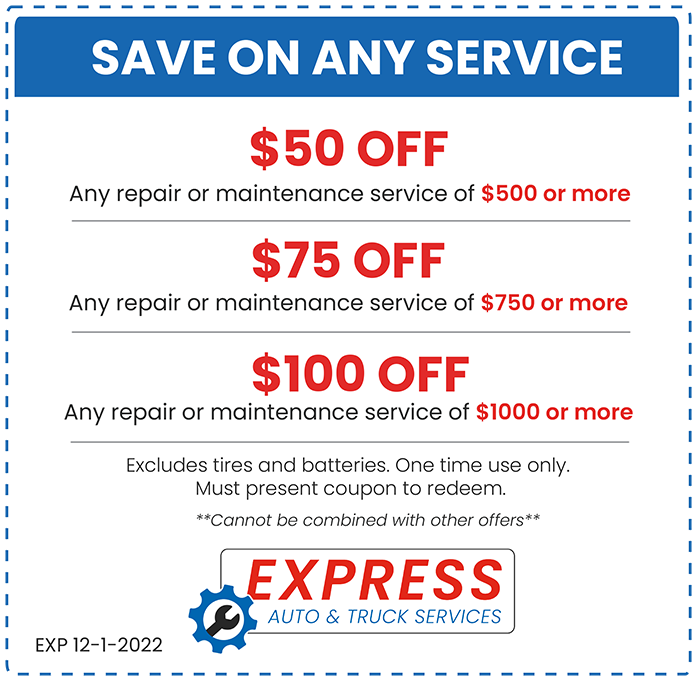
Fail anyway? We walk you through exactly what failed, quote the repair before any work, and handle the retest. With the coupon on our Special Offers page, the state inspection and emissions test is $49.99 plus tax.

PA Inspection Failure FAQs

What is the most common reason to fail a PA inspection?

Worn tires. Tread depth below 2/32 of an inch anywhere on the tire is an automatic failure, and it is the single most common issue inspectors find.

Will a check engine light fail a PA inspection?

In emissions counties like Montgomery County, yes. An illuminated check engine light fails the OBD emissions test performed with the safety inspection. Diagnose the cause first; clearing the code right before testing does not work.

Can I fail for a cracked windshield in PA?

Yes, if the crack or chip is in the area swept by the wipers, particularly in the driver’s line of sight. Small chips outside that area may pass; repairing them early is cheap insurance.

What happens if my car fails inspection?

You get a list of exactly what failed. Once the repairs are made, the vehicle is re-inspected. At Express Truck & Auto Services we quote the repair before any work and handle the retest for you.

Get Inspected the Same Day in King of Prussia

Express Truck & Auto Services is a certified PA state and D.O.T. inspection agency at 331 Crooked Lane, King of Prussia, PA 19406. Drop off before 10:00am and your inspection is done the same day, pass or fail. Call (484) 370-2835 or schedule online.

Do Diesel Trucks Need Emissions Testing in Pennsylvania?

The short answer: no. Diesel-powered vehicles are exempt from Pennsylvania’s emissions inspection program. If your truck runs on diesel, you do not need an emissions test in PA. You still need the annual state safety inspection, and commercial trucks may also need a federal DOT inspection, so diesel owners are not off the hook entirely.

Who Actually Needs an Emissions Test in Pennsylvania

  • Gasoline-powered vehicles registered in one of the participating emissions counties, which include Montgomery County where King of Prussia sits.
  • Vehicles with a gross vehicle weight rating of 9,000 pounds or less. Heavier vehicles are exempt even if they run on gasoline.
  • In our region the test is an OBD plug-in check performed together with the annual safety inspection.

If your vehicle is diesel, or heavier than 9,000 pounds GVWR, the emissions requirement does not apply to it under current rules. When in doubt, ask us or check the Drive Clean PA program information from PennDOT and DEP.

What Diesel Truck Owners Still Need Every Year

  • The annual Pennsylvania state safety inspection applies to every registered vehicle, diesel or gas, from a diesel pickup to a medium-duty box truck.
  • Commercial vehicles with a GVWR of 10,001 pounds or more that operate in interstate commerce also need a periodic federal DOT inspection.
  • Regular preventive maintenance matters more on diesels: fuel filters, DPF health, and cold-weather readiness keep a work truck earning.

Diesel Inspections and Service in King of Prussia

Express Truck & Auto Services is a certified PA state and D.O.T. inspection agency, and our shop handles diesel truck repair, box truck repair, and fleet maintenance under one roof. Drop your truck off before 10:00am and your state inspection is done the same day, pass or fail.

Diesel Emissions FAQs

Do diesel pickup trucks need emissions testing in PA?

No. Diesel-powered vehicles are exempt from the Pennsylvania emissions inspection program, regardless of county. They still require the annual state safety inspection.

Does my diesel truck still need a PA state inspection?

Yes. Every vehicle registered in Pennsylvania needs its annual safety inspection, whatever the fuel type. Diesel exemption applies only to the emissions test.

Do heavier gasoline trucks need emissions testing?

No. Vehicles over 9,000 pounds GVWR are exempt from PA emissions testing even when gasoline powered. They still need the annual safety inspection.

Where can I get a diesel truck inspected near King of Prussia?

Express Truck & Auto Services at 331 Crooked Lane, King of Prussia is a certified PA state and D.O.T. inspection agency. Call (484) 370-2835 or schedule online, and drop off before 10:00am for same-day inspection.

Need an Inspection Today in King of Prussia?

Express Truck & Auto Services is a certified PA state and D.O.T. inspection agency at 331 Crooked Lane, King of Prussia, PA 19406. Call (484) 370-2835 or schedule online. Open Monday to Friday 9:00am to 6:00pm and Saturday 9:00am to 2:00pm.
Is There a Grace Period for an Expired PA State Inspection?

The short answer: no. Pennsylvania does not give drivers a general grace period after an inspection sticker expires. Your sticker is valid through the last day of the month punched on it, and starting the first day of the next month, an officer can cite you, even if the sticker is only a day out of date.

What Happens If You Drive With an Expired Inspection Sticker

  • An expired inspection is a non-moving violation in Pennsylvania, so it does not add points to your license.
  • The base fine is small, but once court costs and fees are added, most drivers end up paying well over $100.
  • You can be cited more than once. Every traffic stop with an expired sticker can produce a new citation, so waiting gets more expensive, not cheaper.
  • An expired sticker can also draw attention to your vehicle and lead to closer roadside scrutiny for other issues.

The One Exception: Driving to a Scheduled Inspection

Pennsylvania recognizes one narrow exception. If your inspection has expired, you are permitted to drive the vehicle directly to an inspection station for an inspection that has already been scheduled. That means the trip to the shop itself, not normal day-to-day driving while you get around to it. Keep proof of your appointment with you, and confirm current rules with PennDOT if you are unsure about your situation.

How to Get Legal Again the Same Day

This is the easy part. At Express Truck & Auto Services in King of Prussia, drop your vehicle off before 10:00am and we complete your PA state inspection and emissions test the same day, pass or fail, with no waiting around. With the coupon on our Special Offers page, the inspection and emissions test is $49.99 plus tax. Bring your current registration and proof of insurance.

We inspect cars, pickups, box trucks, RVs, and medium-duty trucks, and as a certified D.O.T. inspection agency we can handle DOT inspections for commercial vehicles at the same visit.

Expired Inspection FAQs

Is there a grace period for an expired inspection in PA?

No. Pennsylvania has no general grace period. Your sticker expires at the end of the month shown on it, and you can be cited starting the next day. The only exception is driving directly to an inspection station for a scheduled appointment.

How much is the fine for an expired inspection in PA?

The base fine is small, but with court costs and fees the total is typically well over $100, and you can receive a new citation at every stop until the vehicle passes inspection.

Can I drive my car to the inspection station if my sticker is expired?

Yes. Pennsylvania permits driving directly to an inspection station for a scheduled inspection appointment. Keep proof of the appointment with you and drive straight there.

How fast can I get a PA state inspection in King of Prussia?

Drop your vehicle off at Express Truck & Auto Services before 10:00am and the inspection is completed the same day, pass or fail. Call (484) 370-2835 or book online.

Need an Inspection Today in King of Prussia?

Express Truck & Auto Services is a certified PA state and D.O.T. inspection agency at 331 Crooked Lane, King of Prussia, PA 19406. Call (484) 370-2835 or schedule online. Open Monday to Friday 9:00am to 6:00pm and Saturday 9:00am to 2:00pm.